
Nervous System Regulation: Why So Many High-Functioning Adults Feel Wired, Tired and Unable to Switch Off

If you are competent, productive and outwardly “coping” yet privately exhausted this is likely not a motivation issue.
It is a nervous system issue.
In Australia, searches for burnout recovery, anxiety without reason, and how to calm the nervous system naturally continue to rise. What most people are experiencing is not weakness. It is chronic sympathetic activation.
The body has been in “go” mode for too long.
What Nervous System Regulation Actually Means
Your autonomic nervous system has two primary modes:
Sympathetic activation — mobilisation, focus, stress response
Parasympathetic activation — restoration, digestion, repair
Healthy regulation is not permanent calm.
It is flexibility.
The ability to mobilise when needed and then return to baseline.
Many high-functioning adults no longer return to baseline.
Instead, they live in:
Low-grade hypervigilance
Shallow breathing
Cognitive overdrive
Muscular tension
Disrupted sleep
Eventually this becomes:
Irritability
Hormonal disruption
Brain fog
Emotional flatness
Exhaustion that rest does not fix
This is not a mindset failure. It is physiological load.
Why Traditional “Relaxation” Often Doesn’t Work
Telling someone to “just relax” does not regulate the nervous system.
Cognitive strategies are top-down.
Nervous system regulation is bottom-up.
The body must feel safe before it can soften.
This is where immersive sound can play a role.
How Sound Influences the Nervous System
Sound works through entrainment.
When the body is immersed in sustained tonal vibration such as gongs or Tibetan bowls several measurable processes can occur:
Brainwave activity can shift toward alpha and theta states
Heart rate may stabilise
Breath rhythm slows naturally
Muscle tone reduces
The vagus nerve receives rhythmic stimulation
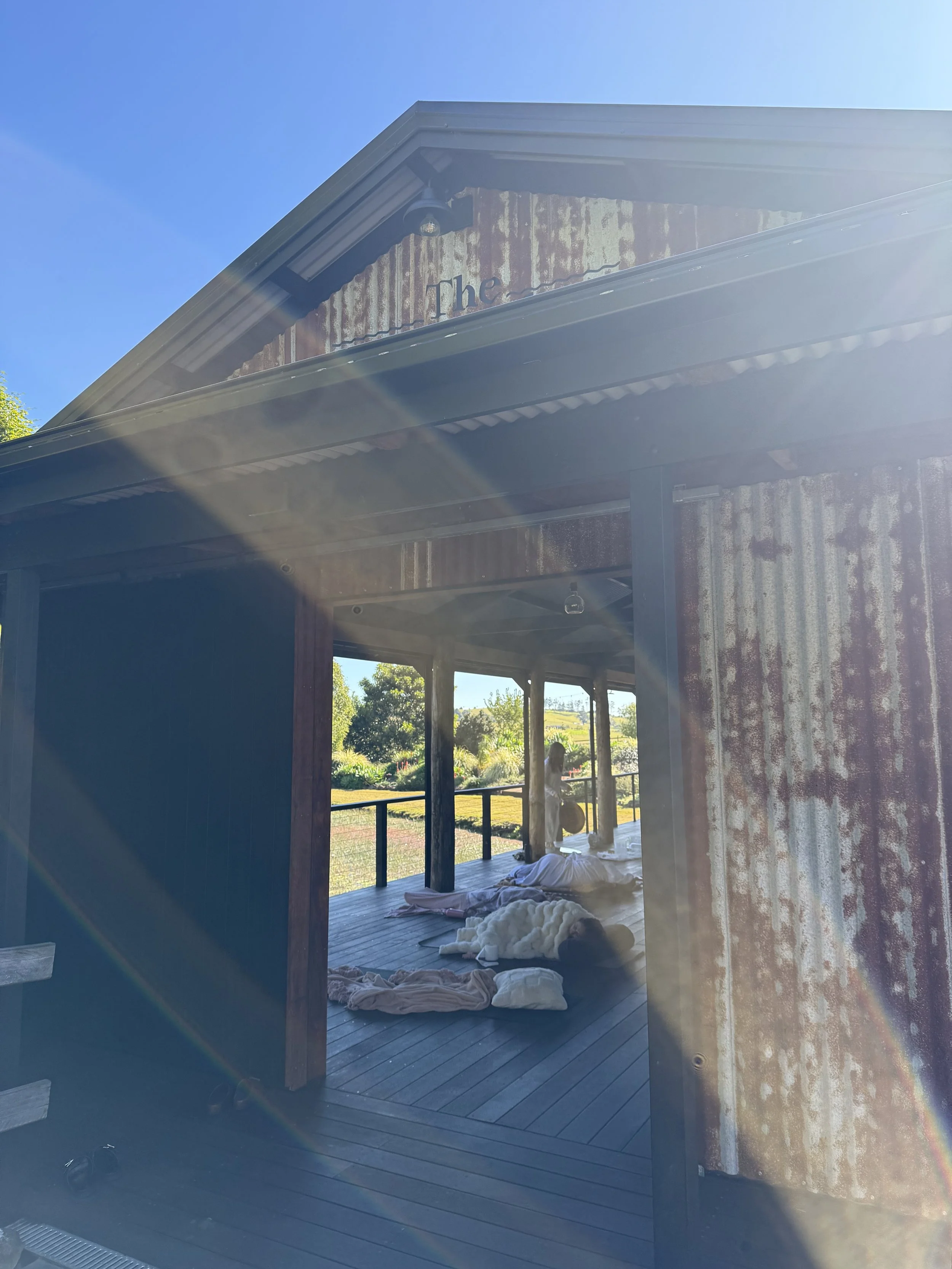
Importantly, this happens without force.
You do not have to “try.”
For individuals who struggle to meditate because their thoughts race, sound provides a physiological anchor.
It gives the nervous system something steady to organise around.
Regulation Is Not About Escaping Stress
One of the biggest misconceptions in wellness culture is that calm equals weakness.
True regulation increases capacity.
It allows you to:
Navigate pressure without collapse
Respond instead of react
Think clearly under demand
Sleep deeply
Sustain energy over time
In our work at Mellow Habits, sound experiences are designed not to overwhelm or stimulate, but to restore baseline.
The intention is not intensity.
It is recalibration.
Who Benefits Most from Nervous System Work?
Those who:
Hold responsibility
Run businesses
Work in leadership roles
Care for others
Create constantly
Feel mentally “on” all the time
In other words capable adults who rarely switch off.
Our Austrlian-based sound immersions and retreat experiences are structured with this demographic in mind.
Not as escapism.
As nervous system literacy in practice.