
Simple Ways to Meditate (For People Who Think They Can't)
If you've ever sat down to meditate and spent the entire time thinking about what to have for dinner, you're not doing it wrong. Your nervous system is just wired for movement, noise and output, and traditional meditation asks it to do the opposite without any transition.
The good news is that meditation isn't one thing. It's not a cushion, an app, or twenty minutes of silence. It's any practice that brings your nervous system out of overdrive and into the present moment. There are many ways in.
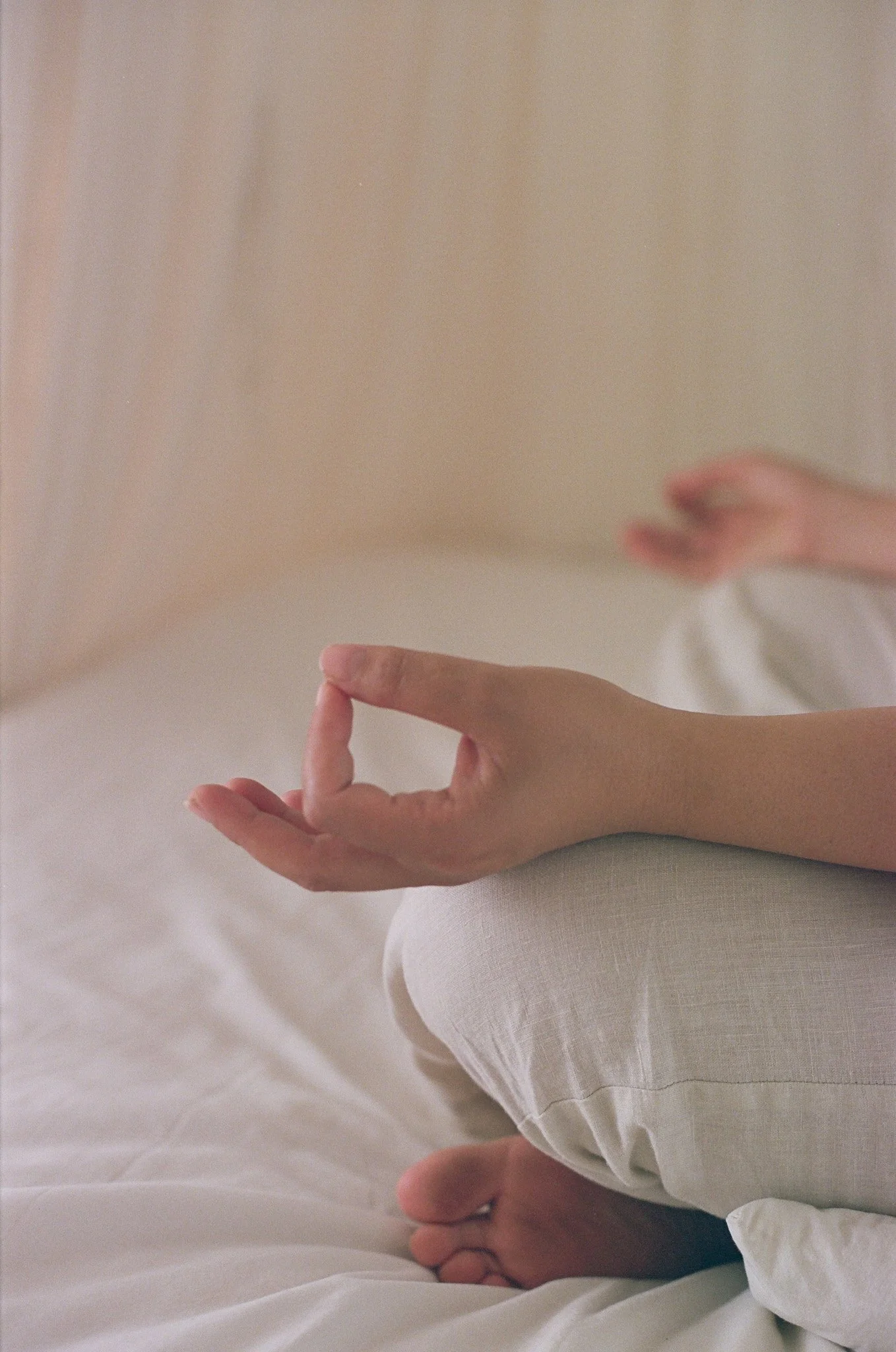
What works better is finding a sensory doorway.
Your mind isn't the problem. Your entry point is.
Most people give up on meditation because they start with the hardest version. Sitting still, eyes closed, chasing a quiet mind. For a nervous system that's been running on high for years, that's like being told to sprint before you've learnt to walk.
What works better is finding a sensory doorway. Something that gives your busy mind something to do while your body begins to soften. Sound, breath, movement and rest can all be that doorway.
Try sound first
Sound is one of the most accessible entry points into a meditative state because it bypasses the thinking mind entirely. You don't have to concentrate, visualise or follow instructions. You simply listen.
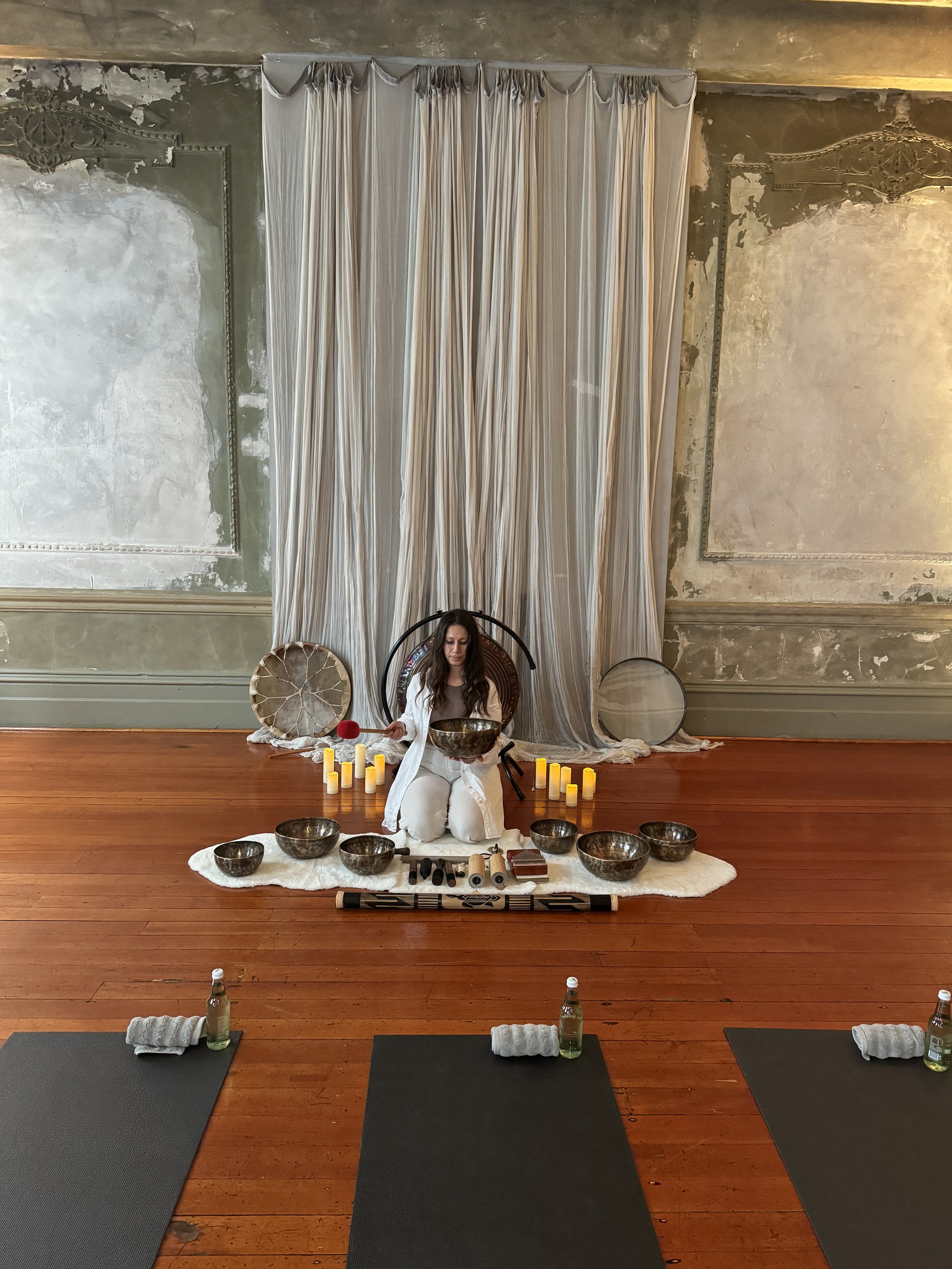
A sound bath uses instruments like singing bowls, gongs and chimes to create layered frequencies that naturally slow brainwave activity. The body responds before the mind has time to argue. Many people who have never been able to meditate find themselves in the deepest rest of their lives during a sound bath, not because they tried harder, but because they stopped trying altogether.
If you can't access a live sound bath, try lying down with headphones and a long-form ambient or binaural audio track. Give it at least twenty minutes before you judge it.
Use breath as an anchor, not a task
Breathwork gets complicated quickly, but it doesn't need to. The simplest version is this. Breathe out for longer than you breathe in.
A slow exhale activates the parasympathetic nervous system, the branch responsible for rest and restoration. Try four counts in, six counts out. Don't force it. If your mind wanders, come back to the exhale. The exhale is always there.
This works sitting at your desk, lying in bed, or waiting in your car. It doesn't require an app, a class or a quiet room.
Let your body lead
Somatic practices like gentle movement, body scanning and conscious stillness are meditation for people who live in their heads. Instead of trying to quiet the mind, you shift attention into physical sensation. The weight of your body. The temperature of the air. The feeling of your feet on the floor.
Start with two minutes. Sit or lie down and slowly move your attention from your feet upward, noticing sensation without trying to change anything. Tension, warmth, tingling, heaviness. All of it is information. None of it needs fixing.
When attention is in the body, it can't simultaneously spiral. That is the practice.
Rest counts
Rest counts
Rest is not the reward you get after you've been productive enough. It is a practice in its own right, one that requires intention, slowness and permission.
Lying down without your phone and doing nothing is a form of meditation. Sitting outside without an agenda is a form of meditation. Allowing yourself to be still without justifying it is, for many people, the hardest practice of all.
At Mellow Habits, we believe rest is a skill. One that can be learnt, deepened and returned to, even by the busiest, most wired nervous systems.
You don't need to be good at it
Meditation isn't something you master. It's something you return to. Some days the mind quiets quickly. Other days it doesn't quiet at all. Both are the practice.
If you've been looking for a way in that doesn't require stillness you don't have, start with sound. Start with one long exhale. Start with two minutes on the floor.
The nervous system knows how to rest. It just needs the right conditions to remember.
If you're curious about experiencing this in person, Mellow Habits offers sound baths across Brisbane, Gold Coast, Byron Bay and Melbourne, as well as wellness speaker experiences and nervous system workshops for corporate teams and retreat hosts. Explore upcoming experiences or get in touch through the connect page.