
What Is a Sound Bath and What Does It Actually Do to Your Body
If you have never been to a sound bath, the name probably conjures something vaguely confusing. Water, perhaps. Or something very spiritual that requires prior experience and a particular kind of personality.
Neither is true.
A sound bath is one of the most accessible wellness experiences available right now, and it requires nothing from you except the willingness to lie down and listen.
Here is what it actually is, and what it does to your body while you are in it.
What is a sound bath
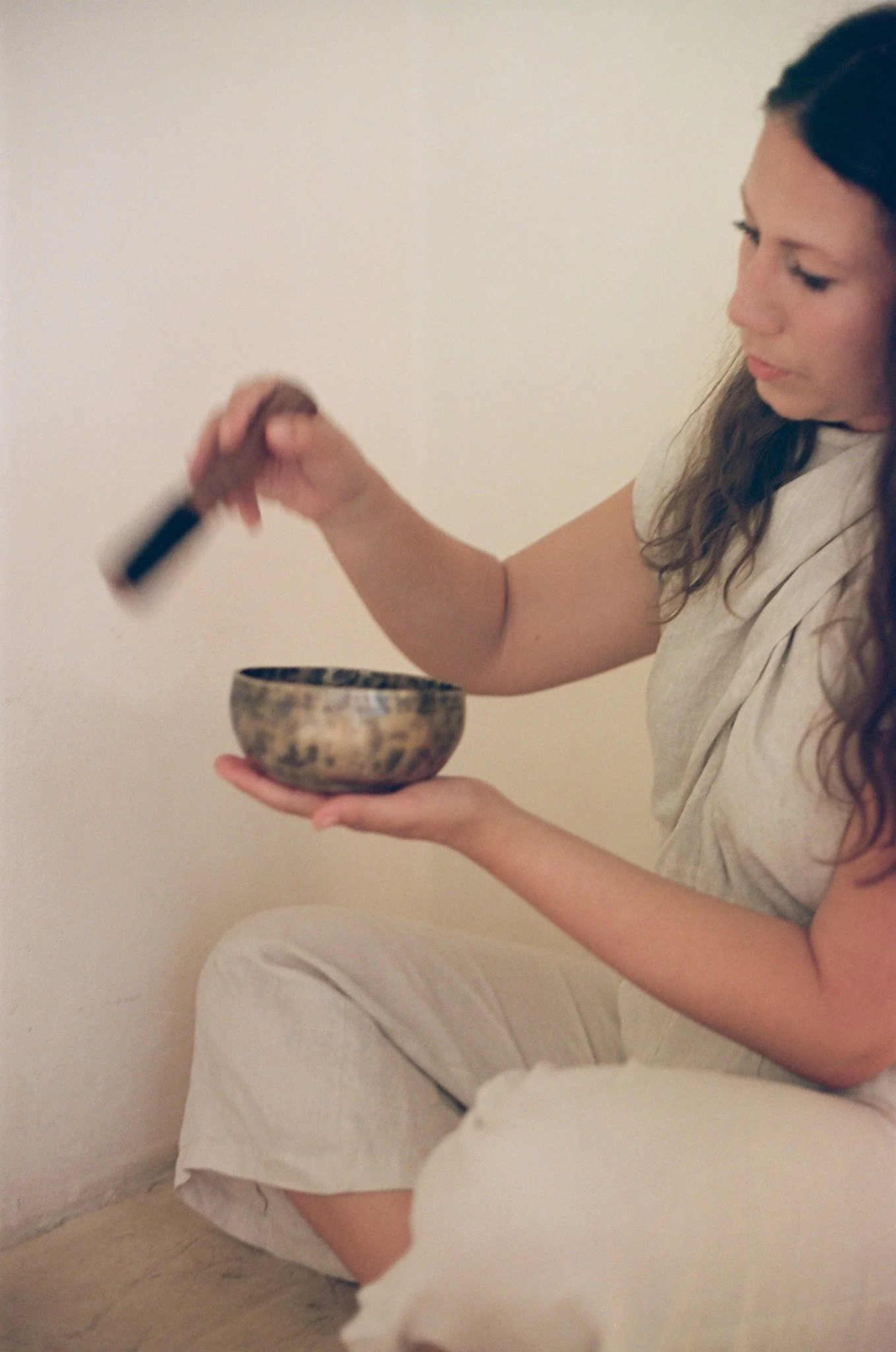
A sound bath is an immersive experience where you lie down comfortably while a practitioner plays resonant instruments around you. The most common instruments are crystal singing bowls, Tibetan singing bowls, gongs, chimes and tuning forks.
The term "bath" refers to being bathed in sound, not water. The idea is that the layered frequencies wash over and through you, creating an environment where the body can shift out of its usual state of alertness and into something much quieter.
Sessions typically run between 45 minutes and 90 minutes. You do not need to do anything. You do not need to concentrate, visualise, breathe in any particular way or empty your mind. You simply receive.
What is actually happening in your body during a sound bath
This is where it gets interesting.
When you are immersed in sustained tonal sound, your brainwave activity begins to shift. In everyday waking life, your brain operates primarily in beta waves, the frequency associated with active thinking, problem solving and alertness. During a sound bath, brainwave activity tends to slow toward alpha and theta states.
Alpha is the state you move into just before sleep, or during deep relaxation. Theta is the state associated with dreaming, deep meditation and the moments just before you drift off completely. These are the states where the body does its most restorative work.
At the same time, several other things can occur. Heart rate tends to stabilise and slow. Breathing naturally deepens without any effort on your part. Muscle tension begins to release. The vagus nerve, which runs from the brainstem through the body and plays a central role in nervous system regulation, receives rhythmic stimulation from the sound frequencies around it.
The result is a shift from sympathetic nervous system activation, the state associated with stress, urgency and the feeling of needing to be somewhere else, into parasympathetic activation. Rest and restore mode. The state where digestion works properly, where cellular repair happens, where sleep becomes possible.
This is not metaphor. It is physiology.
Why people fall asleep and whether that is okay
It is very common to fall asleep during a sound bath, particularly in your first few sessions. For many people, it is the first time their nervous system has genuinely downshifted in months or years. The body takes the opportunity and runs with it.
Falling asleep is not doing it wrong. It is often a sign that your body was deeply tired and finally found a safe enough environment to let go.
Even when you sleep, the sound frequencies continue moving through the space and through your body. Many people report feeling the effects of the session even when they have no memory of being awake for most of it.
The mind simply does not want to cooperate.
Why it works when meditation does not
Traditional seated meditation asks the mind to lead. You are instructed to focus, to notice thoughts, to return attention to the breath. For a nervous system that has been running on high, that is an enormous ask. The mind simply does not want to cooperate.
Sound works differently. It is a bottom-up approach rather than a top-down one. Instead of asking the thinking mind to create calm, sound bypasses the thinking mind entirely and speaks directly to the body. The body begins to regulate before the mind has had a chance to argue.
This is why people who have never been able to meditate often find sound baths profoundly effective. It is not that they were doing meditation wrong. It is that they needed a different entry point.
What a floating sound bath is and why it goes deeper
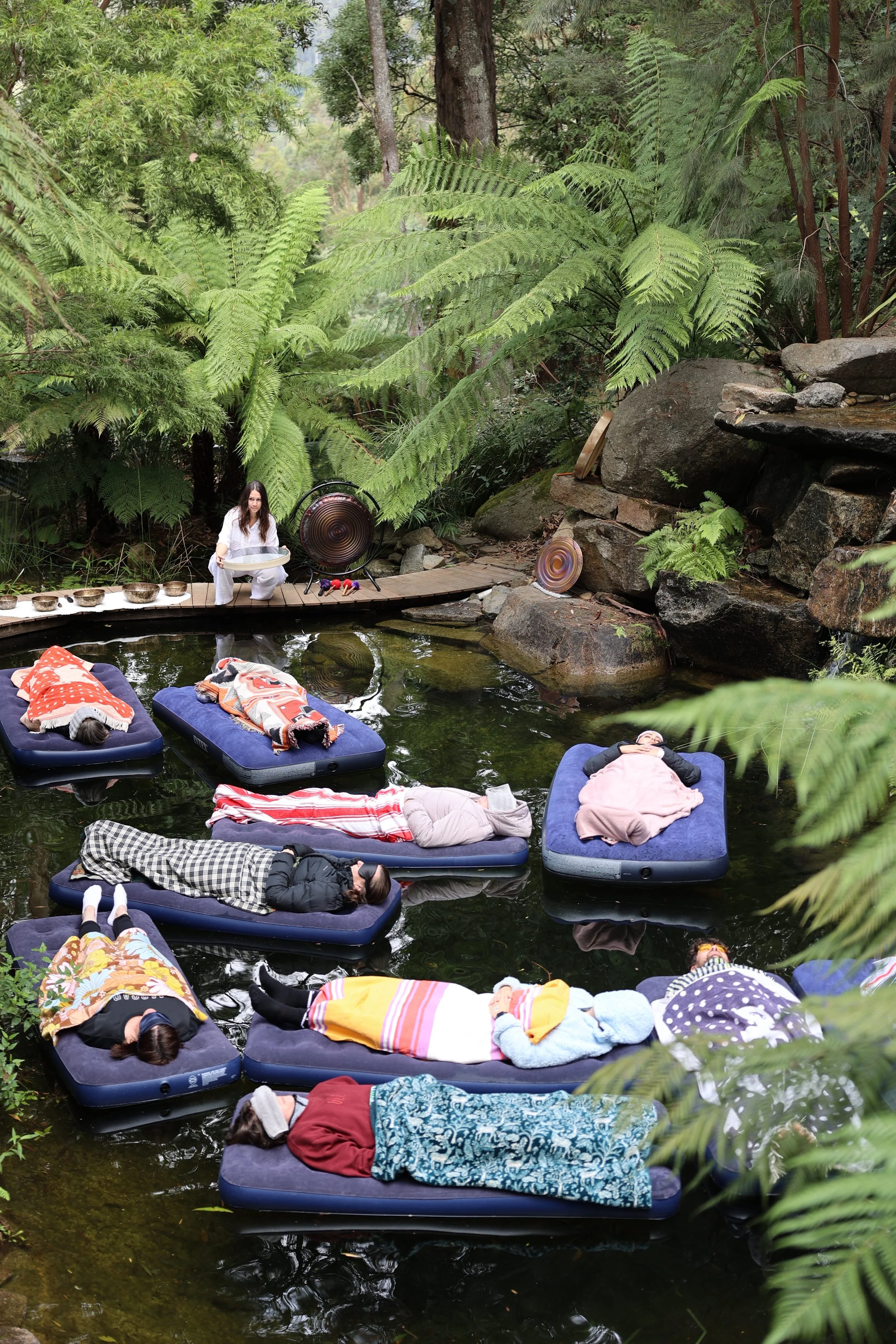
A floating sound bath takes the experience one step further. Rather than lying on a mat or cushion on the floor, participants float gently on water while the sound moves around and beneath them.
Water conducts sound more efficiently than air. When you are floating, the vibrations of the instruments travel through the water and directly into the body, creating a physical sensation alongside the auditory one. The effect is a deeper, more immediate experience of the sound.
At Mellow Habits, floating sound baths are held across Brisbane, Gold Coast, Melbourne and Byron Bay. They are consistently described as unlike anything participants have experienced before, not because they are intense, but because they are so completely effortless.
What to expect if you come to one
You will be asked to lie down on a mat, often with a blanket and an eye pillow provided. The room will be dimly lit and quiet before the session begins. There may be a short breathing exercise to help you arrive.
Then the sound begins.
Most people notice their body softening within the first ten minutes. Some feel a gentle tingling or warmth. Some see colours or images behind closed eyes. Some simply drift. All of it is normal and none of it is required.
Afterward, most people describe feeling deeply rested, quieter than usual and more present in their body than they were when they walked in. Some feel emotional. Some feel nothing in particular but sleep better that night than they have in weeks.
There is no right way to experience a sound bath. There is only your experience, whatever it happens to be.
Who sound baths are for
Sound baths are for people who are tired but cannot rest. For people whose minds run constantly. For people who have tried meditation and found it inaccessible. For people who are managing stress, anxiety, disrupted sleep or the low-grade exhaustion that comes from moving too fast for too long.
They are also simply for people who are curious.
You do not need any prior experience with wellness, meditation or sound healing. You do not need to believe in anything in particular. You only need to be willing to lie down and give your nervous system an hour of quiet.
That is enough.
Mellow Habits offers sound baths and floating sound bath experiences across Brisbane, Gold Coast, Byron Bay and Melbourne. Zara also facilitates wellness speaker sessions and nervous system workshops for corporate teams, retreat venues and hospitality partners. You can explore upcoming experiences or get in touch through the connect page.